
 Image 1 of 2
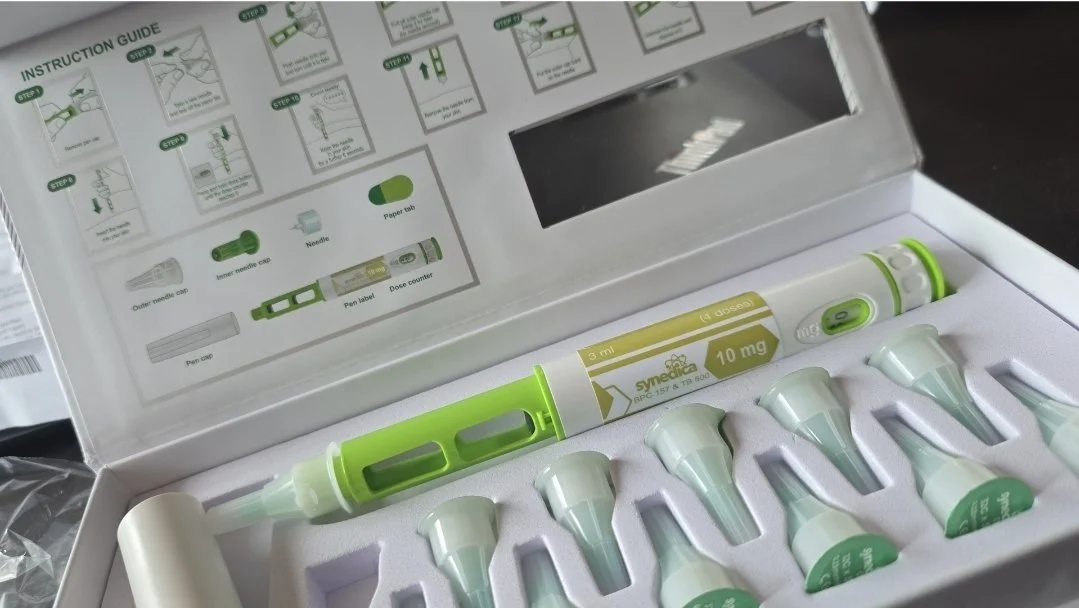 Image 2 of 2
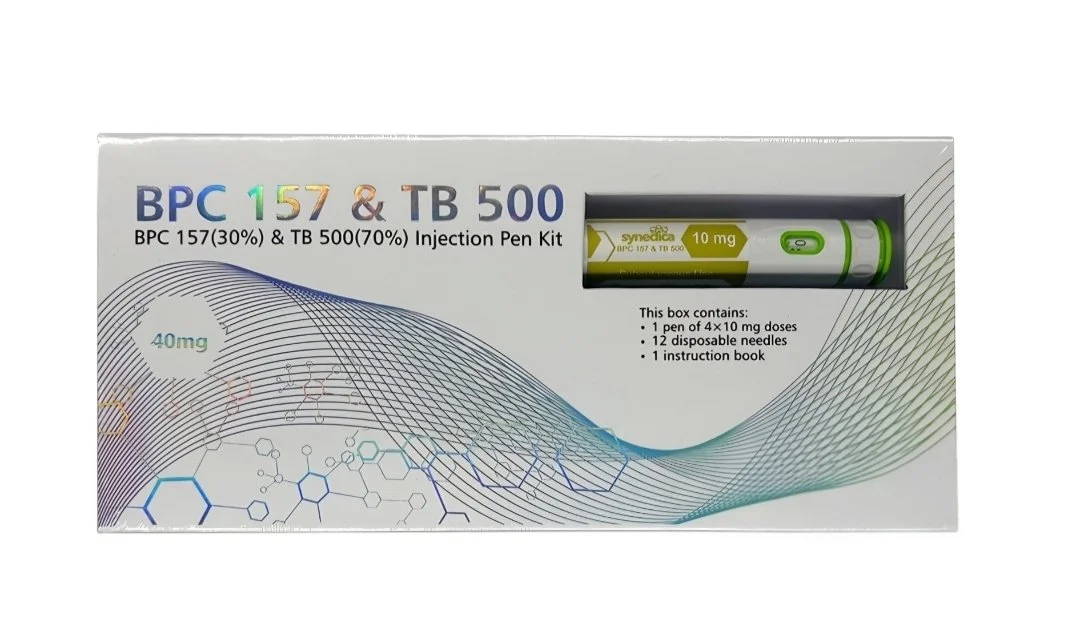
BPC-157 + TB500 Combined Pen
Combined Peptide Pen: Mechanism of Action
Overview
This pen delivers a synergistic blend of TB-500 (Thymosin Beta-4) and BPC-157 (Body Protection Compound-157), both known for their regenerative, anti-inflammatory, and healing properties. The formulation is designed for clinical research use only, not for human consumption.
🔹 TB-500 (Thymosin Beta-4) – 28mg per pen
Primary Actions:
Promotes tissue regeneration by upregulating actin (a protein essential for cell migration and repair).
Reduces inflammation by modulating cytokine activity.
Improves angiogenesis (formation of new blood vessels), aiding in faster healing.
Supports muscle recovery and joint health.
Mechanism:
TB-500 binds to G-actin and promotes cell migration.
It activates integrin-linked kinase (ILK) and VEGF pathways, which are crucial for tissue repair and vascular growth.
It also downregulates NF-κB, a key inflammatory transcription factor.
🔹 BPC-157 – 12mg per pen
Primary Actions:
Accelerates wound healing, especially in tendons, ligaments, and the gastrointestinal tract.
Protects endothelial cells and promotes angiogenesis.
Modulates neurotransmitter systems, showing potential in reducing pain and improving mood.
Stabilizes gut-brain axis, which may help with systemic inflammation.
Mechanism:
BPC-157 interacts with growth hormone receptors, nitric oxide pathways, and dopaminergic systems.
It enhances fibroblast migration, collagen production, and vascular repair.
It also modulates serotonin and dopamine receptors, which may contribute to its neuroprotective effects.
⚙️ Pen Delivery System
Dosage Control: The pen allows precise microdosing, ideal for research protocols requiring consistent administration.
Absorption: Typically administered subcutaneously, allowing slow and sustained release into systemic circulation.
Stability: The peptides are lyophilized or stabilized in solution to maintain potency during storage and use.
🔬 Synergistic Benefits
Combining TB-500 and BPC-157 may offer enhanced healing and anti-inflammatory effects due to complementary mechanisms:
Recent studies have explored the potential of peptides as innovative treatments for lupus (systemic lupus erythematosus, or SLE), focusing on their ability to modulate the immune system and reduce inflammation. One promising candidate is a peptide that mimics SOCS1 (Suppressor of Cytokine Signaling 1), which has shown the ability to dampen overactive immune responses in lupus-prone mice, leading to reduced autoantibody levels and improved kidney and skin health. Another approach involves using small peptides derived from histone proteins—components of the cell nucleus that are often targeted by the immune system in lupus. These peptides, when administered in low doses, appear to retrain the immune system to tolerate these self-antigens, significantly lowering autoantibody production and increasing regulatory T-cell activity, which helps restore immune balance.
Beyond these, researchers are developing tolerogenic peptides—synthetic sequences designed to promote immune tolerance and suppress autoreactive T-cells. These are still in early stages but represent a growing area of interest. Additionally, peptides like thymosin alpha-1, BPC-157, and KPV, known for their general anti-inflammatory and immunomodulatory effects, are being considered for broader autoimmune applications, though direct evidence in lupus is limited.
While these findings are encouraging, it's important to note that most peptide-based lupus therapies are still in preclinical stages, primarily tested in animal models. None are currently approved for human use in lupus treatment, and further clinical trials are needed to confirm their safety and effectiveness.
⚠️ Research Use Only
This product is strictly for clinical research and laboratory investigation. It is not approved for human use, and any therapeutic claims must be validated through controlled trials.
Combined Peptide Pen: Mechanism of Action
Overview
This pen delivers a synergistic blend of TB-500 (Thymosin Beta-4) and BPC-157 (Body Protection Compound-157), both known for their regenerative, anti-inflammatory, and healing properties. The formulation is designed for clinical research use only, not for human consumption.
🔹 TB-500 (Thymosin Beta-4) – 28mg per pen
Primary Actions:
Promotes tissue regeneration by upregulating actin (a protein essential for cell migration and repair).
Reduces inflammation by modulating cytokine activity.
Improves angiogenesis (formation of new blood vessels), aiding in faster healing.
Supports muscle recovery and joint health.
Mechanism:
TB-500 binds to G-actin and promotes cell migration.
It activates integrin-linked kinase (ILK) and VEGF pathways, which are crucial for tissue repair and vascular growth.
It also downregulates NF-κB, a key inflammatory transcription factor.
🔹 BPC-157 – 12mg per pen
Primary Actions:
Accelerates wound healing, especially in tendons, ligaments, and the gastrointestinal tract.
Protects endothelial cells and promotes angiogenesis.
Modulates neurotransmitter systems, showing potential in reducing pain and improving mood.
Stabilizes gut-brain axis, which may help with systemic inflammation.
Mechanism:
BPC-157 interacts with growth hormone receptors, nitric oxide pathways, and dopaminergic systems.
It enhances fibroblast migration, collagen production, and vascular repair.
It also modulates serotonin and dopamine receptors, which may contribute to its neuroprotective effects.
⚙️ Pen Delivery System
Dosage Control: The pen allows precise microdosing, ideal for research protocols requiring consistent administration.
Absorption: Typically administered subcutaneously, allowing slow and sustained release into systemic circulation.
Stability: The peptides are lyophilized or stabilized in solution to maintain potency during storage and use.
🔬 Synergistic Benefits
Combining TB-500 and BPC-157 may offer enhanced healing and anti-inflammatory effects due to complementary mechanisms:
Recent studies have explored the potential of peptides as innovative treatments for lupus (systemic lupus erythematosus, or SLE), focusing on their ability to modulate the immune system and reduce inflammation. One promising candidate is a peptide that mimics SOCS1 (Suppressor of Cytokine Signaling 1), which has shown the ability to dampen overactive immune responses in lupus-prone mice, leading to reduced autoantibody levels and improved kidney and skin health. Another approach involves using small peptides derived from histone proteins—components of the cell nucleus that are often targeted by the immune system in lupus. These peptides, when administered in low doses, appear to retrain the immune system to tolerate these self-antigens, significantly lowering autoantibody production and increasing regulatory T-cell activity, which helps restore immune balance.
Beyond these, researchers are developing tolerogenic peptides—synthetic sequences designed to promote immune tolerance and suppress autoreactive T-cells. These are still in early stages but represent a growing area of interest. Additionally, peptides like thymosin alpha-1, BPC-157, and KPV, known for their general anti-inflammatory and immunomodulatory effects, are being considered for broader autoimmune applications, though direct evidence in lupus is limited.
While these findings are encouraging, it's important to note that most peptide-based lupus therapies are still in preclinical stages, primarily tested in animal models. None are currently approved for human use in lupus treatment, and further clinical trials are needed to confirm their safety and effectiveness.
⚠️ Research Use Only
This product is strictly for clinical research and laboratory investigation. It is not approved for human use, and any therapeutic claims must be validated through controlled trials.